*Last Updated – June 23, 2024*
EARLY LIFE:
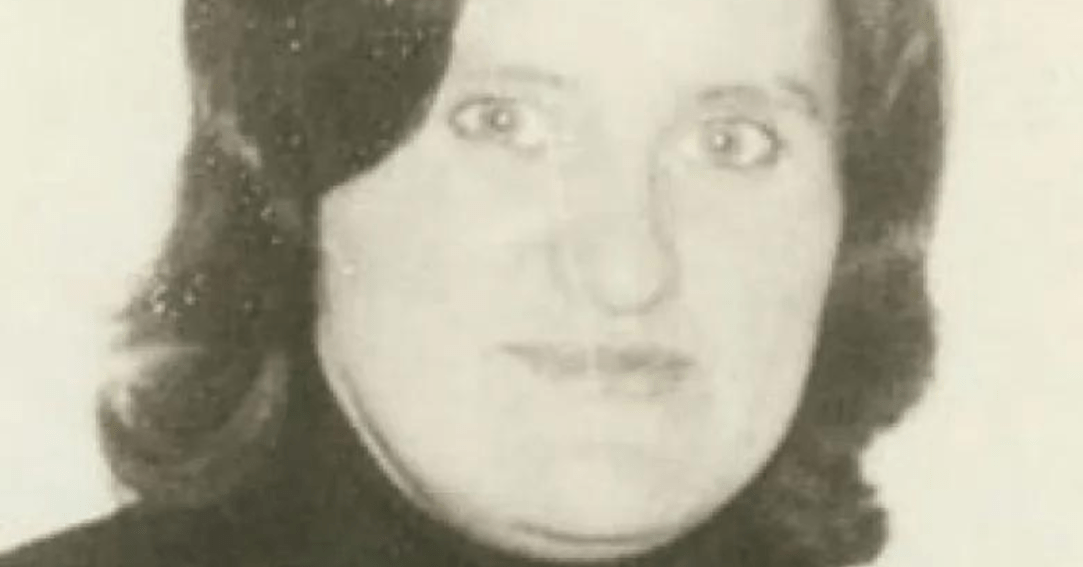
Suzanne Miller of London, Ontario, was born in 1948. A dedicated mother of three, she and her common-law husband resided together in the apartment block of 26 Gammage Street, near the city’s army barracks.
Suzanne was described as an introvert who loved to spend her free time cooking and sewing. In 1974, she was working a job at the local Metropolitan department store to help provide for her family.
At the time of her disappearance and murder, she was 10 days shy of celebrating her 26th birthday.
DISAPPEARANCE:
September 15, 1974, started out as a normal day for Suzanne. She had made plans to meet at her sister’s apartment and was last seen leaving her own around 1:30 PM. However, she never arrived at her sister’s residence.
The next day, Suzanne still hadn’t returned home and hadn’t been seen by anyone who knew her, so her husband reported her missing to the London Police Service.
DISCOVERY:
Without much information to go on, investigators were initially working on the theory that Suzanne was a simple missing person. Their first big break came on September 23, 1974, when her 1972 blue Datsun Fastback was discovered abandoned at Argyle Mall, just southeast of where she was last seen.
Police weren’t able to surmise much upon examination of the car, as there were no signs of blood or forensic evidence.
On October 12, 1974, the missing persons case turned into a homicide investigation, as Suzanne’s decomposing body was found in a wooded lot in Thorndale, Ontario, near the banks of the Thames River. The location was only a short drive northeast of London.
INVESTIGATION:
Upon the discovery of Suzanne’s body, the investigation became a joint one between the Ontario Provincial Police (OPP) and the London Police Service. The murder came at a time when there were many unsolved homicides in the area.
When found, Suzanne’s body was fully clothed, except for being barefoot. An autopsy surmised the cause of death to have been blunt-force trauma to the head by either a tool or metal instrument. There were no signs of sexual assault.
While there was a purse containing identification found near the body, police waited a bit before publicly revealing the human remains belonged to Suzanne.
The investigation into who killed Suzanne was in full swing. It’s believed the murder occurred at another, yet-to-be-identified location and that her body was dumped in the wooded lot in an attempt to conceal it.
On October 20, 1974, a visitation for Suzanne was held, where a potential person of interest made an appearance. A mystery man who was balding and smelt of alcohol came to observe the casket and donate $20 for flowers. He signed the register “a friend”. When asked about his relation to Suzanne, he replied he was simply “a friend” and proceeded to leave the funeral hall. As no one in attendance recognized him, he was followed out, but disappeared into the street.
Police were made aware of this unknown male and felt he might somehow fit into the investigation, so plainclothes officers attended Suzanne’s funeral, in the hopes of running into him. However, he never made an appearance. A sketch was produced from eye witness accounts and released to the public, but the individual’s identity was never discovered.
As the investigation drew on, investigators were having difficulty establishing a motive in the case. According to Suzanne’s friends and family, there was no one they knew of who would want to hurt her, and while there were suspects in 1974, no arrests were made and no names were ever released to the public.
In the hopes of gaining new leads, the OPP offered a $5,000 reward for information leading to the resolution of the case. Despite this, the initial investigation stalled and the case became cold. In the 1990s, there was an attempt to revive the investigation, but no known progress was made.
On July 19, 2018, the OPP announced a revived effort to solve the murder with their “Find My Killer” campaign, which is meant to help reinvigorate and solve the case. Similar style campaigns have been used in Ontario in the past, with success.
The campaign used both social media and posters to put the case back in the public eye. A YouTube video was released, and Suzanne’s image was featured on London Transit buses and on a vinyl-wrapped police minivan that was strategically parked in various locations across the city. Police hoped they’d reach a wider amount of people than in the initial investigation with these tactics.
During the press conference to announced to campaign, police would not say if they had any suspects or persons of interest in the case, but stated they feel the killer might be ready to talk, given they’re getting older.
The OPP have since said they’ve received numerous tips, but would not state if they have any new leads in the investigation.
AFTERMATH:
Suzanne’s murder remains one of London’s most notorious cold cases.
In the video released by the OPP, Suzanne’s sister pleaded for the killer to come forward, stating she feels they must be feeling guilt over the case.
The murder was included in the book, Murder City: The Untold Story of Canada’s Serial Killer Capital, 1959-1984. It was written by Western University professor and retired London Police officer Michael Arntfield and covers London’s unsolved murders. In the book, Arntfield shares that he feels the murder could be a “personal cause homicide”, meaning the murderer was motivated by personal reasons that have to do with their relationship with Suzanne.
As of the 2018 press conference, the reward for information was increased to $50,000.
CASE CONTACT INFORMATION:
Anyone with information regarding the case are asked to call the Ontario Provincial Police tip line at +1 (844) 677-5060 or send an email to smillertips@opp.ca. Those wishing to remain anonymous can call Crime Stoppers at +1 (800) 222-8477.
Image Credits: CBC

 Stories of the Unsolved